

Dealing with Damp in London Homes: How Insulated Render is the Ultimate Cure
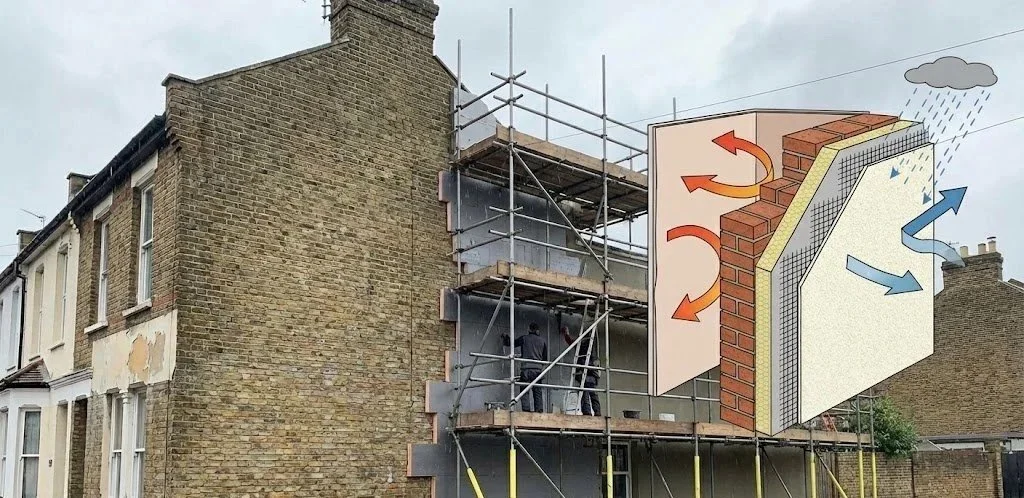
It is a familiar story across London. Winter fades, spring arrives, and as you move the sofa or look behind the wardrobe, you find it: the telltale black mould, the musty smell, or the patch of peeling paint.
Damp is one of the most persistent and damaging problems facing London homeowners. Our capital’s beautiful, historic housing stock—particularly the Victorian and Edwardian solid brick terraces—is uniquely vulnerable to moisture.
While dehumidifiers and anti-mould sprays offer temporary relief, they do not address the root cause. If you are tired of battling damp every year, it is time to look at a permanent solution: Insulated Render, also known as External Wall Insulation (EWI).
Here is why your London home gets damp, and how wrapping it in thermal insulation is the most effective cure.
The Two Main Culprits: Condensation and Penetrating Damp
To fix damp, you first need to know what kind you have. In London’s solid wall properties, the issue is almost always one of two things, or a combination of both:
1. Condensation (The Most Common Issue)
This is an internal problem caused by modern living in older houses. We cook, shower, dry clothes, and breathe, creating huge amounts of water vapour.
In a solid-walled London home during winter, the external brickwork is cold. This makes the internal surface of the wall cold, too. When warm, moist air inside the house hits that cold wall, it dumps its moisture as liquid water—just like steam on a cold bathroom mirror.
Over time, this constant wetness leads to black mould growth, usually in corners, around windows, or behind furniture where airflow is poor.
2. Penetrating Damp
This is an external problem. London’s ageing brickwork faces driving rain, wind, and pollution. Over decades, mortar joints crumble, bricks become porous, and slight structural movements create hairline cracks in existing old render or pebble dash.
When it rains hard, water soaks through the exterior skin and travels through to the plaster inside, creating damp patches that grow darker when it rains.
How Insulated Render Fixes Both Problems at Once
Insulated render isn't just a facelift; it is a fundamental change to the physics of your building. It involves fixing a layer of high-performance insulation material to the outside of your existing brickwork, which is then covered with a robust, weather-resistant decorative finish, usually a silicone render.
Here is how this "tea cosy" effect solves damp:
It Cures Condensation by Warming the Walls
By placing insulation on the outside, you stop the cold from ever reaching the original brickwork. The bricks absorb the heat generated inside your home and retain it.
Because the internal surfaces of your walls are no longer cold, warm, moist air inside the house does not condense upon contact. By eliminating the "dew point" from the inner surface, you eliminate the primary cause of black mould.
It Stops Penetrating Damp by Sealing the Exterior
A modern insulated render system acts as a complete, continuous waterproof barrier for your home.
It covers cracks, blown brickwork, and porous mortar. Driving rain simply beads up and runs off the new silicone surface, completely stopping water from bridging to the interior plaster.
The Vital Importance of "Breathability" in London Homes
A common fear among London homeowners is that insulating an old house will "seal it up" and make damp worse. This is only true if the wrong materials are used.
Victorian houses need to "breathe", meaning moisture vapour generated inside needs a way to escape slowly through the walls.
At JVG (London) Ltd, we primarily use silicone render systems, often combined with mineral wool insulation. These materials are hydrophobic (they repel rain) but also vapour-permeable. They allow trapped moisture within the old walls to escape outwards, preventing damp from getting locked into the structure.
The Bonus Benefits
Fixing damp is often the primary motivation, but insulated render brings other major benefits:
Massive Heat Retention: A dry, insulated wall keeps heat in, slashing energy bills.
Improved EPC Rating: As discussed in our previous posts, this is vital for future proofing your property’s value in 2026 and beyond.
A Stunning New Look: You get rid of stained, cracked exteriors and gain a modern, clean finish that requires virtually no maintenance for decades.
Banishing Damp for Good
You do not have to live with the smell of mould or the worry of crumbling plaster. By addressing the cold walls that cause condensation and sealing the cracks that allow rain ingress, insulated render is the definitive solution for a healthier, drier London home.
If you are dealing with persistent damp, get the experts in.